

Hello, Aesthetes!
We’ve come across some lovely things this week. A remarkable kind of roof that seems to defy gravity, interiors that aren’t afraid of a little colour, and a clock with a literary streak. There’s also a Japanese garden that proves you don’t need much to create something beautiful, and a house we’d happily spend a few weeks in.
Oh, and you might have noticed we’ve had a little makeover. New look, new home at theaesthete.design, but the same obsession with beautiful things. Some things never change.
Happy exploring!
On The Cover
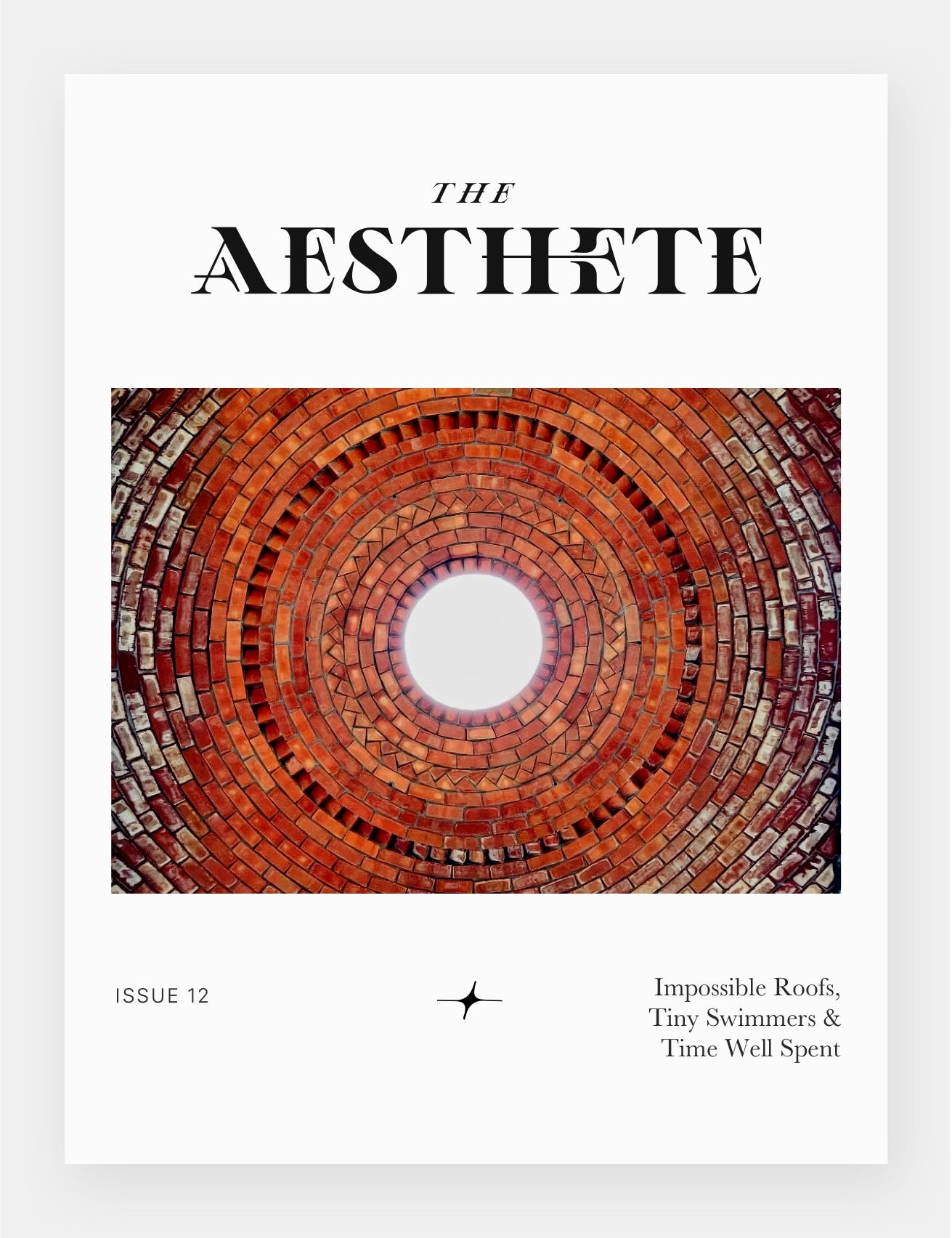
What if we told you that you could build a roof out of bricks, without the usual concrete slab, and make it so flat that you’d barely notice the curve? Sounds like something that would give your structural engineer sleepless nights. But in Rohtak, a town in Haryana, India, a group of extraordinarily skilled masons has been doing just that for decades.
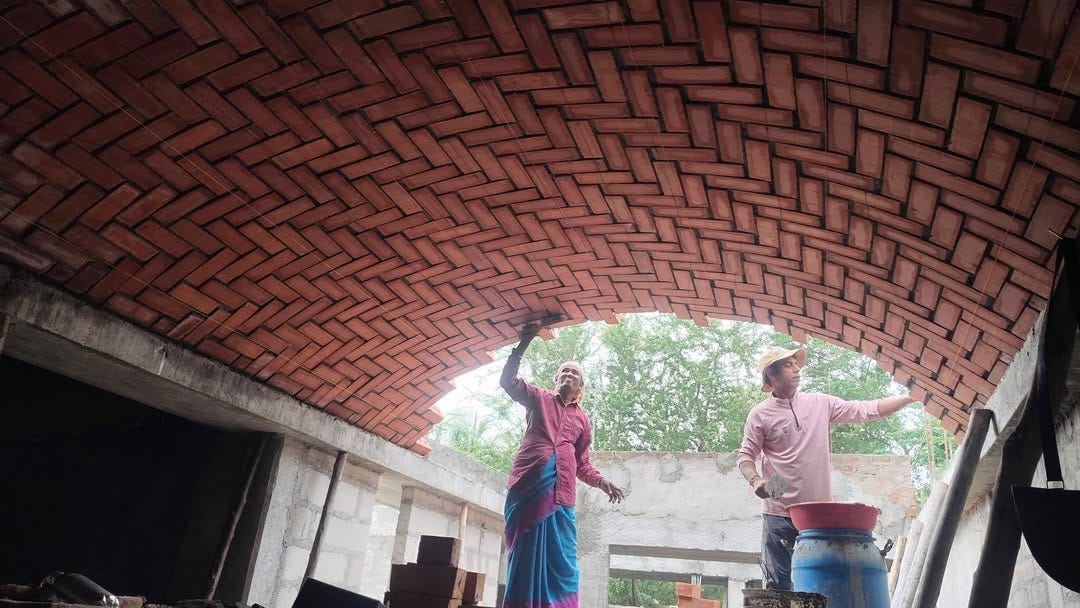
They’re called Rohtak Domes, and they’re a wonderful example of what happens when traditional craftsmanship meets some rather clever geometry.
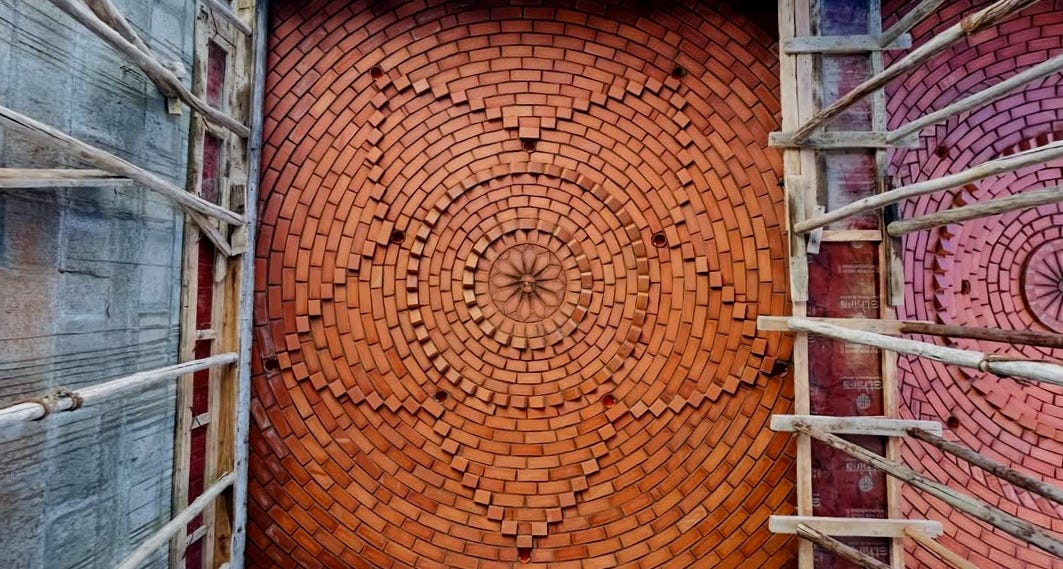
At first glance, they seem to defy the very laws of gravity. How can a roof made of individual bricks, with barely a curve to speak of, hold itself together? The secret lies in some rather clever geometry. Instead of bending under the weight, the dome’s curved shape allows the bricks to press against one another, passing the load sideways and downwards until it reaches the supports. These resist the outward push, keeping the entire structure in balance. Simple in principle, extraordinarily difficult in practice.

The craft has been passed down through generations, with artisans like Azad Singh helping keep it alive. In 2018, architect Surya Kakani brought wider attention to the technique through a collaboration at CEPT University in Ahmedabad.
And beyond the engineering, there’s something deeply satisfying about the results. The exposed brickwork creates beautiful patterns overhead, adding warmth, texture, and a sense of craftsmanship that a conventional flat ceiling rarely achieves.
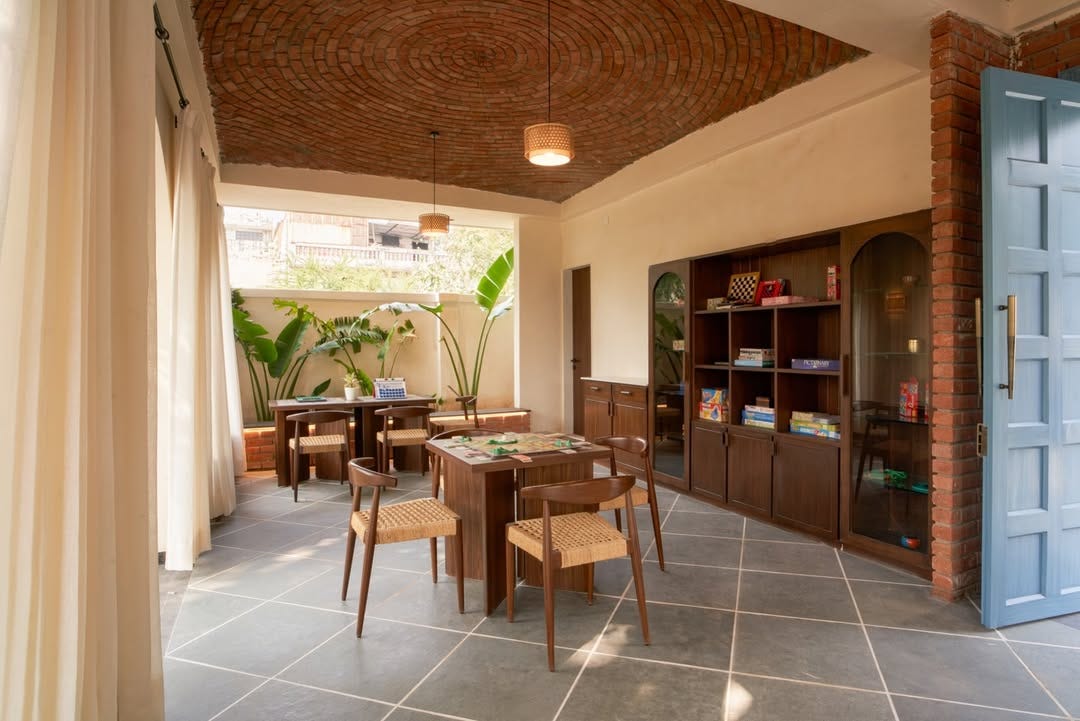
At a time when architecture seems increasingly obsessed with new materials and technologies, Rohtak Domes offer a rather refreshing reminder: sometimes the most interesting innovations are the ones we’ve known how to build for generations.
Spatially Pleasing

If Rohtak’s remarkable domes demonstrate the ingenuity of brick construction, Copenhagen’s Grundtvig’s Church reveals its poetry. Soaring columns, graceful vaulted ceilings, and a warm, almost golden glow transform a humble material into something extraordinary. Inspired by Gothic architecture and built almost entirely from pale yellow bricks, the church relies on repetition, proportion, and natural light to create a truly breathtaking interior.

At what point does a houseplant collection become an indoor botanical garden? This London home might be getting close. Between the sprawling foliage, open shelves packed with pottery, and colourful artwork, there’s barely a quiet corner to be found. Minimalists may wish to look away.

Perched on a hillside overlooking Mexico’s Pacific coast, Casa Sombras makes a pretty convincing case for never leaving home. A wall of glass opens onto a shaded terrace, an infinity pool, and sweeping views of the bay and mountains beyond. Inside, stone, wood, and concrete keep things understated, wisely leaving the spectacular scenery to do most of the showing off. You need to see the video below to truly appreciate it.

Forget the rule about picking one statement piece. This room has about seven, and they’re all competing for attention. From the boldly spotted sofa to the sculptural lamp and richly patterned rug, it’s a glorious pile-up of textures, shapes, and colours. By all accounts, it should be a complete mess, but somehow, all those competing elements find a way to get along.

For owners Any Arany and Enrique Ventosy, Studio Plutarco has created something between a family home and a design laboratory. The experiments are everywhere, from the glossy terracotta shade ceiling to the almost cartoonish proportions of the furniture. Yet the room doesn't feel like a showroom. The generous sofas, soft rug, and warm timber panelling make it somewhere you'd actually want to spend a lazy Sunday. Preferably without spilling coffee on anything experimental.
Landscape Love
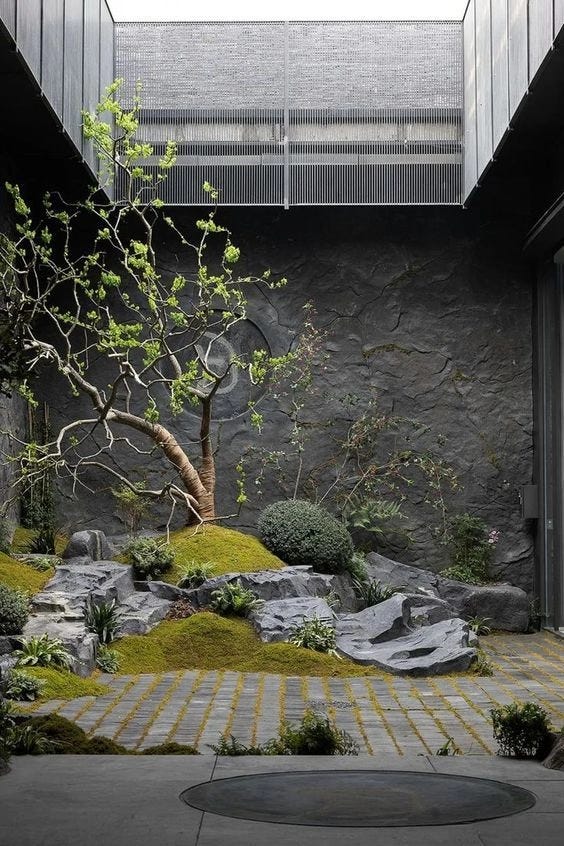
This courtyard borrows a clever trick from Japanese garden design: make a small space feel like an entire landscape. A few carefully placed boulders become miniature mountains, moss suggests rolling hills, and one beautifully imperfect tree provides all the drama. No lawn, no flower beds, and mercifully, no garden gnomes.
A few ideas worth stealing:
Borrow from nature, don’t copy it literally. Group rocks in irregular clusters, vary their sizes, and partially bury them so they look like they’ve always been there.
Use moss as a living carpet. It softens hard stone surfaces and creates a wonderfully aged appearance. Best suited to shaded, consistently moist spots.
Leave room for emptiness. Notice how the planting is concentrated in certain areas? That breathing space makes every tree and boulder feel more important.
Contrast natural and architectural lines. The courtyard’s gray muted walls and paving make the twisted branches and rugged rocks all the more interesting.
Objects Of Desire

The Clock: Remember when alarm clocks just screamed at you until you got out of bed? The Japanese have other ideas. This pocket-watch-inspired beauty takes a no-hands approach to timekeeping, using gentle light, soothing sounds, and a gradual wake-up alarm to ease you into the day. Because mornings are hard enough already.

Justin Case Umbrella Holder: Designer Eduardo Baroni takes the same thankless job and turns it into a little red sculpture for your entryway. Five umbrellas, zero floor space, and a drip tray to handle the aftermath of a downpour. Now that’s a rainy-day upgrade.

Author Clock: A little Shakespeare, a little Dickens, and somewhere in there, the time. Instead of numbers and hands, this clever clock tells time through passages from famous books, with the current time tucked somewhere into the text. It has over 13,000 quotes from authors spanning centuries, all displayed on a beautiful e-paper screen framed in oak. A lovely excuse to check the time and forget what you were doing.

Miniature Swimmer Figurines: Some people collect stamps. Others collect tiny swimmers in polka-dot swimsuits. These miniature figurines come in an assortment of bright colours, enthusiastic diving poses, and even the occasional mermaid. Perfect for terrariums, miniature gardens, or simply confusing visitors who find one lurking among your houseplants.

Waii Mirror: Traditional Thai craftsmanship gets a contemporary twist in this design by Office of Tangible Space. Its sweeping, asymmetrical frame is meticulously woven from natural rattan over a metal structure. The result is a striking piece of functional sculpture that looks just as good on an empty wall as it does above a console.
Art Radar


One For The Classics

On Our Coffee Table

If you've ever spent a small fortune at a nursery trying to make your garden look beautiful, the Japanese might have some rather humbling lessons for you. Sometimes the most striking landscapes are also the most restrained. In The Japanese Garden, Sophie Walker explores centuries of Japanese landscape design, where moss, water, stone, and empty space are treated with extraordinary care. Through gorgeous photography and thoughtful essays, the book reveals how gardens can become places for contemplation rather than just collections of plants. Your lawn may never look quite the same again.
Palette Power

Burnt peach, warm ivory, dusty blue, berry pink and soft apricot. A palette that sounds like a summer fruit salad but looks surprisingly sophisticated when put together. The secret is in the balance. Cool, muted blues keep the warmer tones from getting too sugary, while ivory gives everything a little breathing room. Berry pink adds a playful punch, and soft apricot brings an extra dose of warmth. A lovely reminder that a colour scheme can be cheerful, grown-up and just a little bit cheeky, all at once. Want to see a great way to pull this off in a room? Scroll back up to the last image under the Spatially Pleasing section.
Wordly Pleasures
Beauty is the promise of happiness.
Stendhal